
Extra Virgin Olive Oil Cocktails: When Cuisine Meets the Bar
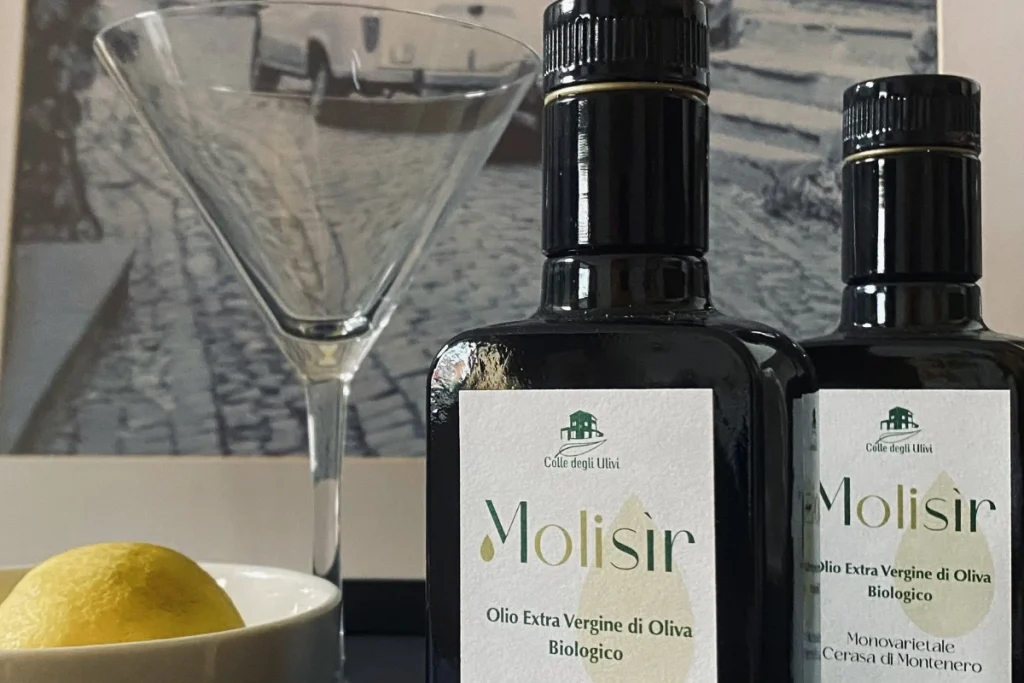
Extra virgin olive oil cocktails are winning over bartenders and aperitivo lovers alike, thanks to the aroma, texture and complexity they bring to a drink. From fat-washing to a simple float on top, EVOO can transform a cocktail’s entire aromatic profile and create unexpected pairings with gin, vermouth, mezcal and other spirits.
In this article, you’ll discover why extra virgin olive oil works so well in cocktails, which techniques to use, and how to choose between single-varietal, blended and flavoured olive oils to achieve balanced and original results.
Why Use EVOO in Cocktails? Understanding Its Sensory Role
To understand why EVOO works so well in mixology, it helps to look at what it brings to a cocktail from a sensory perspective. Three elements make the difference:
Texture and Body
Extra virgin olive oil adds structure and smoothness to a drink. Rather than feeling oily or heavy, it creates a sense of fullness and silkiness that makes the cocktail feel more rounded on the palate. Bartenders refer to this effect as mouthfeel – the tactile sensation a drink creates in the mouth. It is particularly valued in citrus-forward drinks, where olive oil helps balance the acidity of lemon or grapefruit.
The Aromatic Profile of Olive Oil in Cocktails
A high-quality extra virgin olive oil brings a complex bouquet of fruity, herbaceous and spicy notes. In the glass, these aromas reach the nose before the first sip, enhancing the sensory experience from the very beginning. A single-cultivar Leccio del Corno, for instance, with its notes of green almond and artichoke, pairs beautifully with the botanicals of a gin or the complexity of a mezcal.
Polyphenols and Flavour Intensity
Polyphenols – the compounds responsible for a good olive oil’s bitter and peppery character – bring greater depth and complexity to cocktails. Oleocanthal delivers the peppery kick, while oleuropein is associated with bitterness. When balanced correctly, these compounds can enhance a cocktail’s structure and extend its finish on the palate.
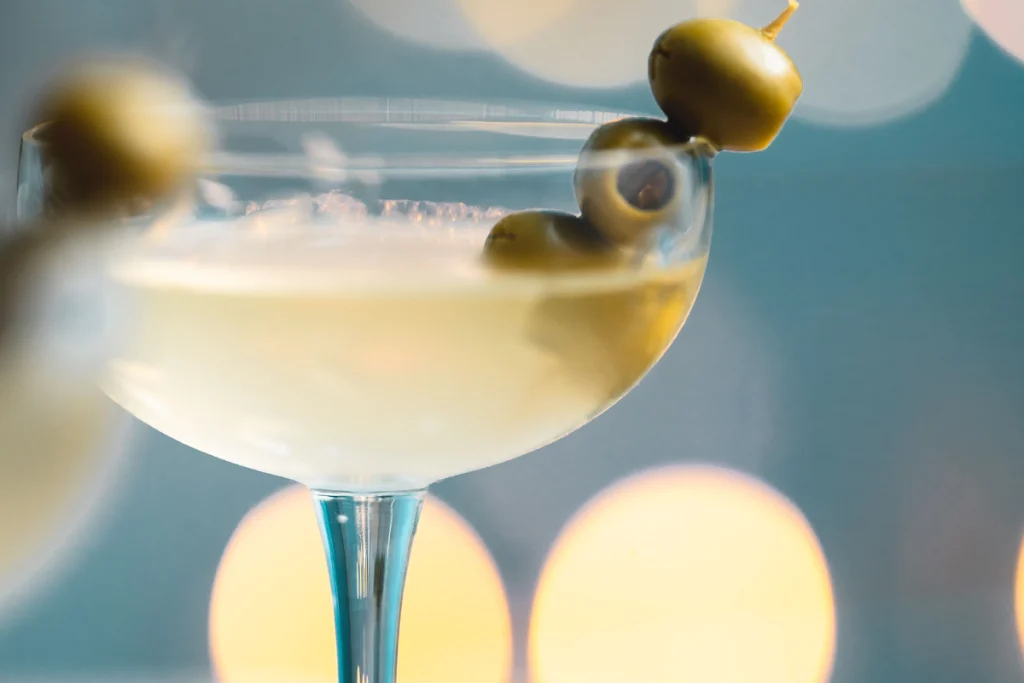
How to Use and Measure Olive Oil in Cocktails: From Fat-Washing to Floats
Extra virgin olive oil can be used in cocktails in several ways, depending on the result you want to achieve: from adding a subtle aromatic top note to completely transforming the character of a spirit. There are three main approaches to using EVOO in cocktails, and each technique requires a specific quantity while producing a distinct sensory effect.
Fat-Washing
This is the most advanced and refined technique. It involves infusing a spirit, such as gin, vodka, rum or whisky, with extra virgin olive oil, allowing the mixture to rest for several hours before separating it through freezing.
The cold solidifies the fats, which are then removed, leaving only the fat-soluble aromatic compounds in the spirit. The result is a richer, smoother and more complex spirit, with no oily residue in the glass.
- Recommended quantity: 10-20 ml per 100 ml of spirit
- Infusion time: 2-12 hours, plus freezing
Float and Drizzle
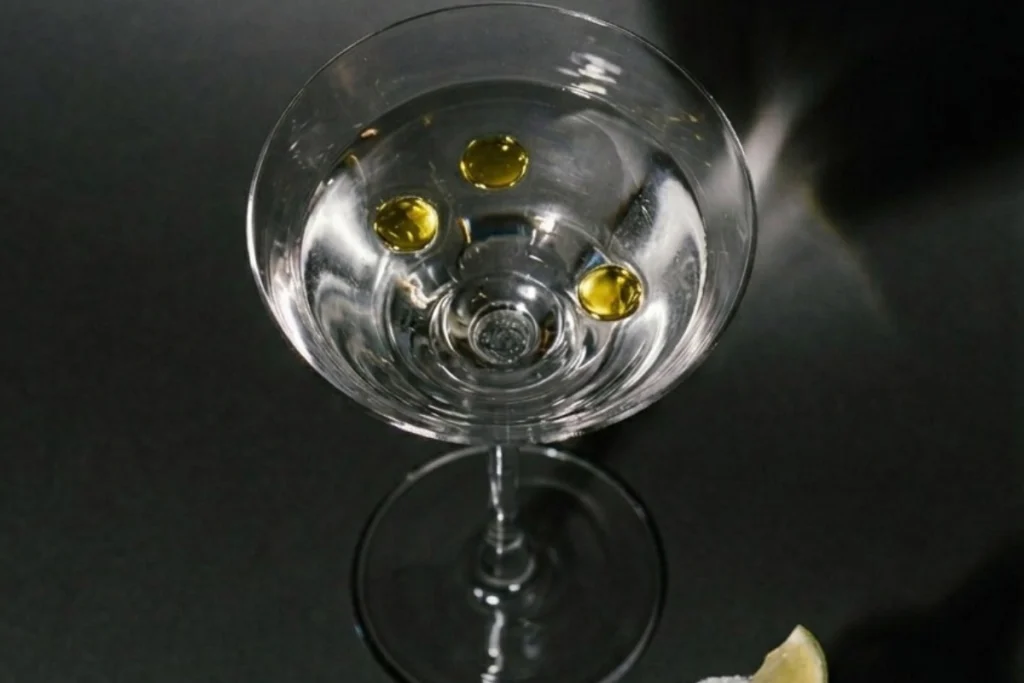
This is the simplest and most immediate technique: a few drops of EVOO are poured directly onto the surface of a finished cocktail.
The oil remains on top, creating a thin aromatic layer that can be appreciated both visually and on the nose. It’s a simple but effective method, ideal when you want to add an immediate burst of aroma, while enhancing presentation.
A delicate blend or a lemon- or basil-flavoured olive oil works particularly well for this technique.
- Recommended quantity: 3-8 ml on the finished drink
- Method: pour slowly, ideally over the back of a spoon
Direct Addition and Shaking
Here, the oil is added directly to the shaker along with the other ingredients.
The shaking action creates a partial emulsion, giving the cocktail a creamier texture with tiny droplets of oil distributed through the drink.
This technique calls for careful measurement: generally, 3-10 ml is enough to achieve the desired effect without making the cocktail feel heavy.
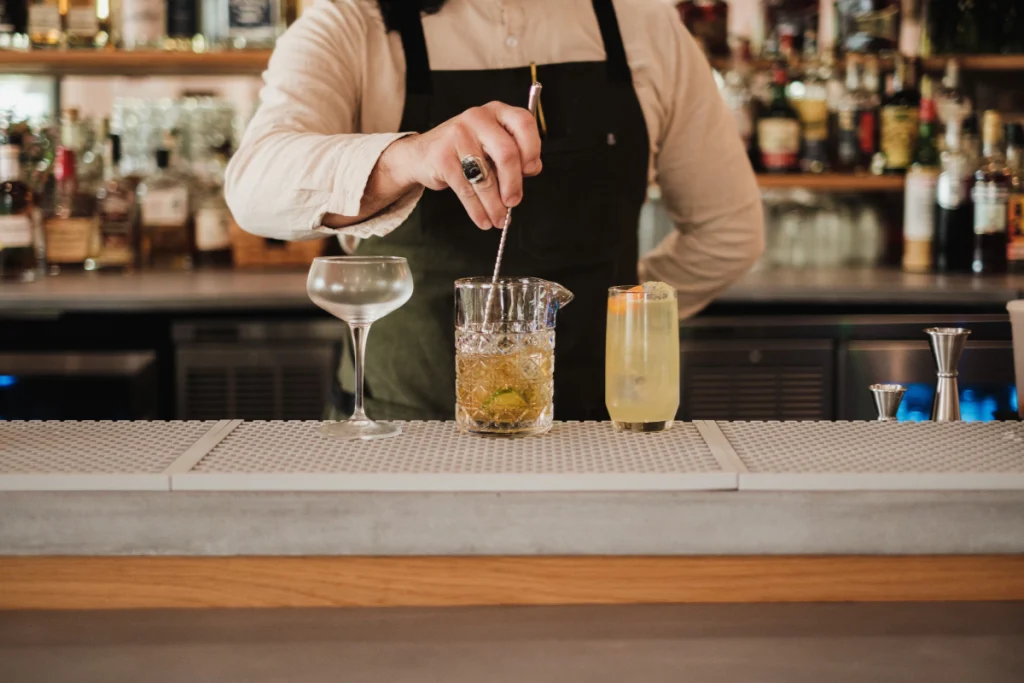
Which Extra Virgin Olive Oil to Choose for Each Cocktail
Choosing the right oil matters just as much as choosing the right spirit. Every cultivar, blend or flavoured oil brings its own sensory profile to the glass.
Single-cultivar Leccio del Corno: for structured botanical drinks
Leccio del Corno is a single-cultivar olive oil that stands out for its notes of green almond, freshly cut grass and a lightly bitter finish.
In mixology, it’s a natural match for aromatic London Dry gins and dry vermouths. It is particularly well suited to fat-washing, where it adds a deep herbaceous complexity to the spirit.
Single-cultivar Cerasa di Montenero: for bold and complex cocktails
Cerasa di Montenero is a native cultivar from Molise with strong regional identity. Its profile is rich, with intense fruity notes, herbaceous nuances and a lightly spicy finish.
In cocktails, it adds character, complementing ingredients and spirits that reflect Italy’s culinary heritage. It works beautifully as a float on a mezcal sour or as the base for a bourbon fat-wash.
Spicy Blend: for Bloody Marys and daring cocktails
The spicy blend has a bold flavour profile, with notes of pepper and aromatic herbs.
It’s a natural fit for a Bloody Mary, enhancing the savoury depth of the tomato while adding a peppery edge that goes beyond tabasco. It’s also worth trying as a float on a Negroni or shaken with tequila and grapefruit juice.
Delicate Blend: for aperitifs and summer drinks
The delicate blend is the ideal entry point for anyone exploring olive oil in mixology for the first time.
Its soft, fruity profile blends in without overpowering, enhancing the other ingredients in a drink rather than dominating them. It’s perfect as a float on a spritz or as a finishing touch on a summer gin and tonic.
Flavoured oils: lemon, basil and rosemary
Flavoured olive oils are one of the easiest ways to experiment with EVOO in cocktails. They combine the character of extra virgin olive oil with the fresh notes of citrus and herbs, creating ready-made flavour pairings that are simple to use behind the bar or at home.
- Lemon-flavoured olive oil: perfect for citrus-forward, refreshing cocktails. A few drops on a gin fizz or a limoncello spritz lift the citrus profile without adding extra acidity.
- Basil-flavoured olive oil: transforms a simple vodka soda into a Mediterranean-inspired drink. Ideal for summer cocktails and combinations featuring tomato and citrus.
- Rosemary-flavoured olive oil: works particularly well in complex, bitter drinks. Rosemary has a natural affinity with woody spirits like bourbon and whisky, as well as Italian amari.
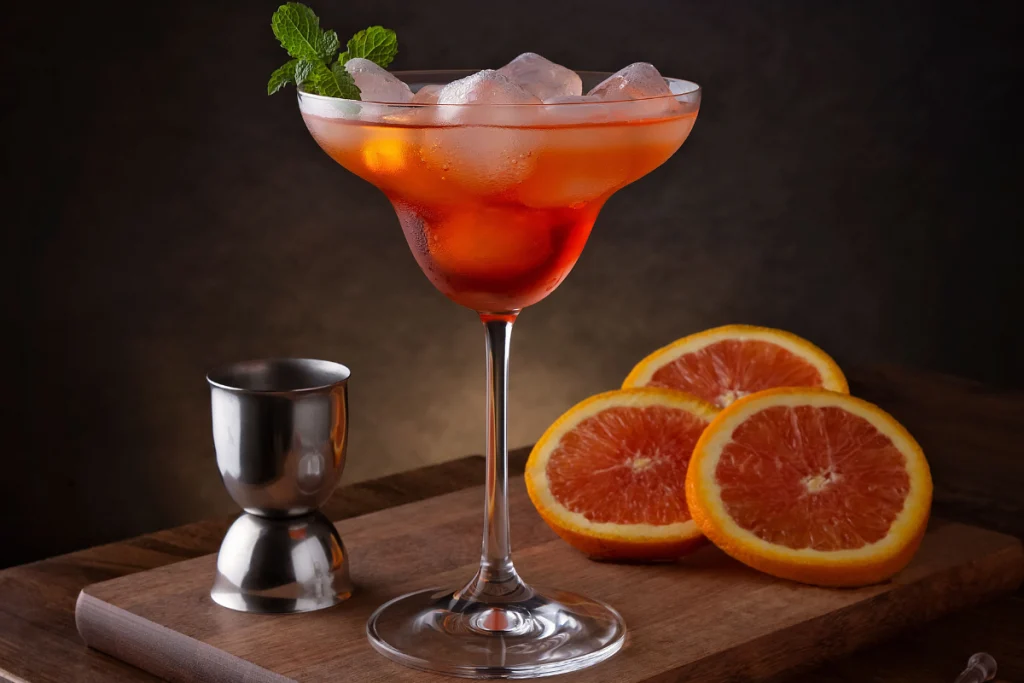
Three Organic EVOO Cocktail Recipes to Try
If you’d like to start experimenting with extra virgin olive oil in cocktails, these three recipes show different techniques, from fat-washing a spirit to adding an aromatic float.
Mediterranean Martini with single-varietal Leccio del Corno
Ingredients
- 60 ml London Dry Gin (fat-washed with 10 ml of Leccio del Corno oil, frozen for 12 hours)
- 15 ml Dry Vermouth
- 3-4 drops of Leccio del Corno oil (finishing float)
- 1 olive
Method
- Prepare the fat-washed gin by combining the gin and olive oil. Leave to rest at room temperature for around 2 hours, then freeze for 8-10 hours. Remove the solidified fat layer from the surface and strain the liquid.
- Pour the fat-washed gin and vermouth into a mixing glass filled with ice.
- Stir for 30 seconds until well chilled.
- Strain into a pre-chilled martini glass.
- Finish with 3-4 drops of Leccio del Corno olive oil floated on the surface and garnish with an olive.
Summer in the Olive Grove with Lemon-Flavoured Olive Oil
Ingredients
- 50 ml Vodka
- 30 ml fresh lemon juice
- 20 ml sugar syrup
- Soda water or tonic, to top
- 5 ml lemon-flavoured olive oil
- Lemon wheel and basil leaf, to garnish
Method
- Add the vodka, lemon juice and syrup to a shaker with ice.
- Shake vigorously for 10 seconds.
- Strain into a highball glass over ice.
- Top with tonic water.
- Finish with a float of lemon-flavoured oil.
- Garnish with a lemon wheel and a basil leaf.
Molise Roots with Cerasa di Montenero and Spicy Blend
Ingredients
- 50 ml Mezcal Joven
- 25 ml fresh lime juice
- 20 ml honey syrup
- 1 barspoon smoked salt
- 5 ml single-varietal Cerasa di Montenero oil (float)
- Optional: 3 drops Spicy Blend (finishing touch)
Method
- Moisten the rim of the glass and coat it in smoked salt.
- Add the mezcal, lime juice and honey syrup to a shaker with ice.
- Shake vigorously.
- Strain into a coupe glass or Old Fashioned glass.
- Slowly float the Cerasa di Montenero olive oil on the surface using the back of a spoon.
- Optional: finish with 3 drops of Spicy Blend on top of the float. Serve immediately.
Olive Oil in Cocktails: A Trend Here to Stay
Extra virgin olive oil in cocktails isn’t a passing trend, but is becoming a permanent fixture in modern bars. Innovative bartenders use it to give their drinks a distinctive identity, highlighting specific cultivars and the regions they come from.
In Italy, this evolution naturally connects with the country’s culinary tradition. Organic Italian EVOO becomes a bridge between the kitchen and the bar, bringing the complexity of local cultivars and the aromatic richness of Italy’s diverse olive oil traditions into the glass.
Summer is the perfect time to experiment: fresh cocktails, Mediterranean-inspired aperitivi and long drinks that tell a story about where they come from. From lemon- and basil-flavoured oils to delicate blends designed for the float technique, and single-cultivar oil suited for fat-washing, extra virgin olive oil offers endless creative possibilities behind the bar.
Mistakes to Avoid When Using Extra Virgin Olive Oil in Cocktails
Extra virgin olive oil can turn a drink into something original and unexpected, but it does require careful handling. A few small mistakes in measurement or oil selection can upset the balance of a drink.
- Using too much oil: when working with olive oil, less is usually more. Using too much can mask the aromas of the base spirit and make the cocktail feel heavy on the palate. As a starting point, 3-8 ml per cocktail is usually enough, with adjustments made gradually depending on the desired result.
- Choosing an unbalanced oil: not all extra virgin olive oils behave the same way in a cocktail. Oils that are overly bitter or carry sensory flaws can throw off the final result. To create a balanced cocktail, it’s essential to use high-quality extra virgin oil with clean, well-defined aromas.
- Neglecting ingredient pairing: just as in cooking, the ingredients in a cocktail should complement one another. A delicate olive oil works well in fresh, citrus-led aperitivi, while a more intense single-cultivar olive oil pairs beautifully with full-bodied spirits such as mezcal, whisky or bourbon.
- Treating oil as mere decoration: a few drops on top may look elegant, but olive oil can do far more than decorate a drink. Techniques like fat-washing or emulsifying olive oil during shaking can actually transform a cocktail’s texture while fully expressing the oil’s aromatic profile.
How to Start Experimenting with Olive Oil in Cocktails
Until recently, extra virgin olive oil seemed destined for the kitchen alone. Today, it’s increasingly finding its place in mixology thanks to its ability to enhance aroma, texture and flavour complexity. From refreshing cocktails to more sophisticated flavour pairings, EVOO opens up new creative possibilities for professionals and enthusiasts alike.
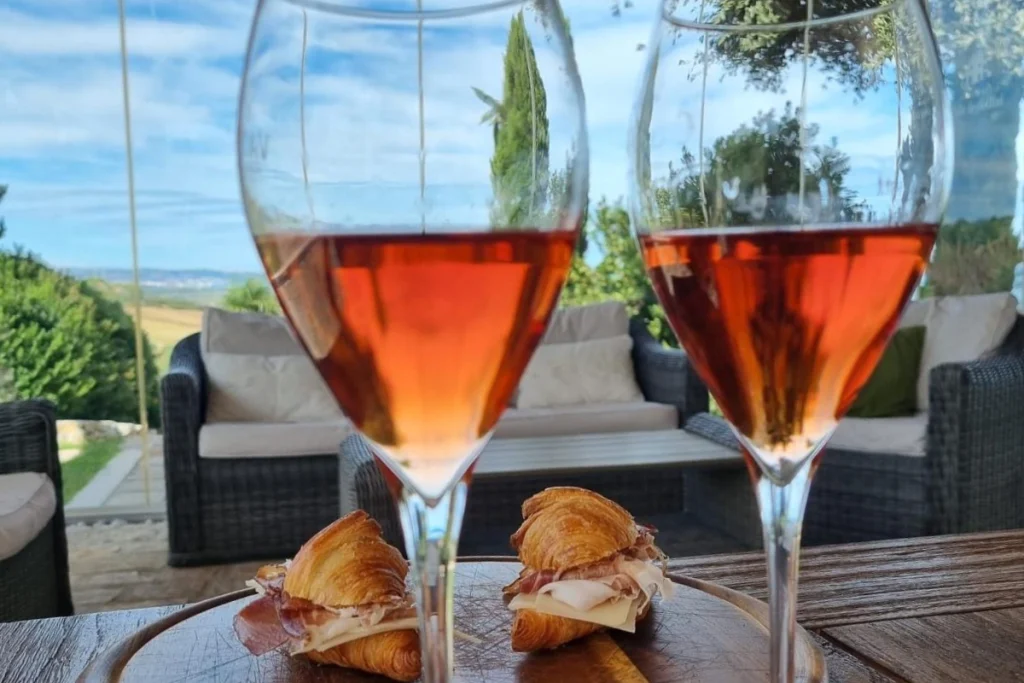
Getting started doesn’t require advanced techniques. A few small steps are enough: a few drops of lemon-flavoured oil on a spritz, a float of delicate blend on a gin and tonic, or a first attempt at fat-washing. Each is an easy way to discover how olive oil can transform a cocktail.
The key is to start with quality ingredients and experiment with balance. Every cultivar, blend or flavoured olive oil brings something unique to the glass, with the potential to elevate botanicals, citrus and spirits in original ways.
Explore our range of organic extra virgin olive oils and find the perfect match for your cocktails, from summer aperitivi to the most complex, structured drinks.